
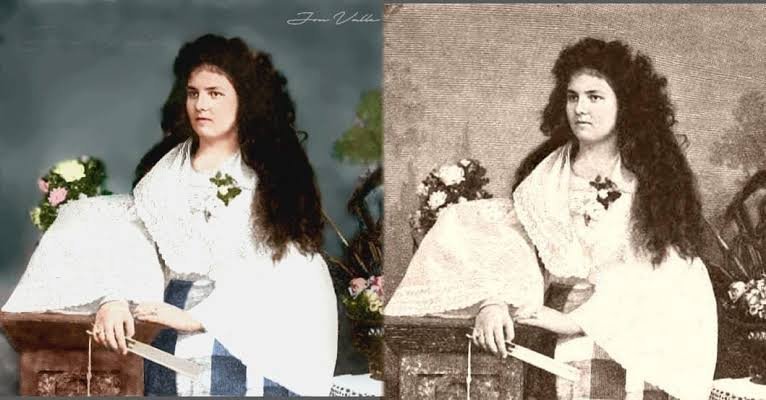
Most people who encounter the name Dolores Bracken Abad do so while researching someone else entirely — usually Josephine Bracken or José Rizal. Dolores herself was never a public figure. She lived a quiet, private life, and what we know about her comes almost entirely from genealogy records and family history sources.
That said, her story is worth telling carefully and honestly. This article covers her documented parentage, her early circumstances, the questions that still surround her ancestry, her adult life, and why her name keeps appearing in discussions about Philippine national history.
Who Was Dolores Bracken Abad?
Her full name appears in different forms across different records — Maria Dolores Bracken Abad, Ma. Dolores Abad, and Dolores Abad y Bracken are all variations that likely refer to the same person. These spelling differences are common in older genealogy records and should not be treated as separate identities.
According to genealogy databases including Geni and FamilySearch, she was born on April 17, 1900, in Hong Kong. These are user-submitted records, so the dates should be treated as supporting evidence rather than fully verified historical fact.
She was not a celebrity or a public personality. Her place in historical discussions comes entirely from who her parents were — not from anything she personally did or said in public life. She reportedly died on December 9, 1987, according to genealogy timelines, though again, this date comes from secondary sources rather than a confirmed civil or government record.
Her Documented Parents — Josephine Bracken and Vicente Abad
The clearest point in Dolores’s documented history is her parentage. Her mother was Josephine Bracken, the Irish-born woman who became closely associated with José Rizal during the final period of his life. Her father was Vicente Abad y Recio, a Filipino mestizo from Cebu.
Josephine and Vicente married in Hong Kong in December 1898. Some secondary sources give slightly different dates for that marriage, and without a verified church or civil record in hand, it is worth acknowledging that discrepancy rather than glossing over it. What is consistent across sources is that the marriage took place before Dolores was born in 1900.
FamilySearch genealogy records list both Josephine Bracken and Vicente Abad as Dolores’s parents. The Filipino Genealogy Project, which has written about the Abad family in some detail, also confirms this parentage. These are the most reliable sources currently available, though neither qualifies as a primary archival document in the strict historical sense.
Was Dolores Bracken Abad José Rizal’s Daughter?
This is the question most readers are likely asking, so it deserves a direct and honest answer.
Based on available records, Dolores is not documented as José Rizal’s biological child. Her documented father is Vicente Abad, whom her mother married in 1898 — roughly two years after Rizal was executed in December 1896. The timeline alone makes Rizal’s biological paternity highly unlikely.
Some older accounts did raise questions about Vicente Abad’s paternity. These claims were generally based on physical appearance, family rumor, or retrospective interpretation — not on any documentary or scientific evidence. The Filipino Genealogy Project notes that the parentage controversy exists, but the available evidence points clearly to Vicente Abad as her father.
The confusion is understandable, at least in context. Josephine Bracken was Rizal’s partner during the last months of his life in Dapitan and Intramuros, and her name is permanently linked to his in Philippine history. It was natural — if not entirely logical — for later readers to wonder whether her daughter might also have been Rizal’s. But wondering is not the same as evidence, and it would be wrong to present that speculation as historical fact.
To be straightforward about it: Dolores is connected to Rizal’s story through her mother, not through any confirmed biological relationship to Rizal himself.
Early Childhood After the Loss of Both Parents
Dolores’s early life was marked by loss that came very quickly. Josephine Bracken died in 1902, when Dolores was approximately two years old. Vicente Abad reportedly died about a year after that, leaving Dolores without either parent before she was old enough to form clear memories of them.
This detail matters for a specific reason. Some later accounts about Josephine Bracken were attributed — directly or indirectly — to family members connected to Dolores. But because Dolores lost her mother at such a young age, she almost certainly had few or no personal memories of her. Any stories about Josephine that circulated within the family were most likely passed down through Vicente’s relatives and Josephine’s in-laws, not from Dolores’s own firsthand recollections.
This does not make those accounts worthless, but it does mean they should be understood as inherited family memory rather than direct testimony. There is a meaningful difference between “Dolores remembered her mother saying this” and “Dolores heard from relatives that her mother had done this.” The latter is the more accurate framing here.
Adult Life — Marriage and Children
Dolores grew up, and as an adult she married. The Filipino Genealogy Project records her marriage to a man named Salvador Mina, placing the marriage on April 4, 1926, in Manila. Some accounts identify the groom’s first name as Antonio rather than Salvador. That discrepancy exists across sources and has not been definitively resolved, so both names appear in different records referring to what appears to be the same marriage.
Her husband came from an Ilokano family background. The marriage reportedly produced four children — two sons and two daughters. One source notes that when Dolores died in December 1987, she was survived by those four children. Beyond those basic details, information about her adult life is sparse. She was, by all accounts, a private person whose life was lived outside of public attention.
Why She Still Appears in Historical Discussions
Given that Dolores Bracken Abad was a private individual who never sought public prominence, it might seem odd that her name keeps appearing in genealogical and historical discussions about the Philippines. The reason is straightforward: she is a documented family link between Josephine Bracken and living descendants.
Josephine Bracken remains a significant figure in Philippine history, partly because of her relationship with Rizal and partly because her own life — born in Hong Kong to Irish parents, raised in the Philippines, widowed young, remarried, and dead by her mid-twenties — was genuinely unusual. Researchers and genealogists who study Josephine naturally follow her family line forward, and Dolores is the next step in that line.
There is also a broader pattern worth noting. Philippine national history, particularly the story of Rizal, has attracted enormous genealogical interest over the decades. Families connected — even loosely — to major figures in that story sometimes find their ancestors drawn into historical discussions they never anticipated. Dolores is a clear example of that. Her inclusion in these discussions reflects Josephine’s fame, not Dolores’s own.
For readers interested in how genealogy intersects with national history, resources like BusinessVerb and similar knowledge-focused platforms can offer context for understanding how family records are preserved and interpreted over time.
A Note on Sources and Certainty
A consistent theme in any careful look at Dolores Bracken Abad’s history is the gap between what is documented and what is repeated. Genealogy databases like FamilySearch and Geni are useful starting points, but they are built from user submissions and carry no independent verification on their own.
The most reliable evidence for any historical genealogy claim is a contemporaneous civil or church record — a birth certificate, a marriage register, a death record. Where those documents have not been publicly confirmed or cited, dates and relationships should be held with some caution. That applies to nearly everything written about Dolores, including what appears in this article.
What can be said with reasonable confidence: she was born in Hong Kong around 1900, her documented parents were Josephine Bracken and Vicente Abad, she married in Manila in 1926, and she died in 1987 having raised four children. That is a quiet life, historically speaking — but it is a real one, and it deserves to be described honestly rather than inflated or distorted by the more dramatic story that surrounds her mother’s name.
Conclusion
Dolores Bracken Abad was not a historical figure in her own right. She was a private woman who happened to be born to a mother whose name is permanently attached to one of the most famous men in Philippine history. Her story is modest by comparison — a childhood defined by early loss, an adult life in Manila, a family of her own.
But she matters as a genealogical fact: a documented child of Josephine Bracken who lived a full life and left descendants behind. Understanding who she actually was, rather than who people sometimes assume she was, is a small but meaningful correction to the historical record.
Read Also: