
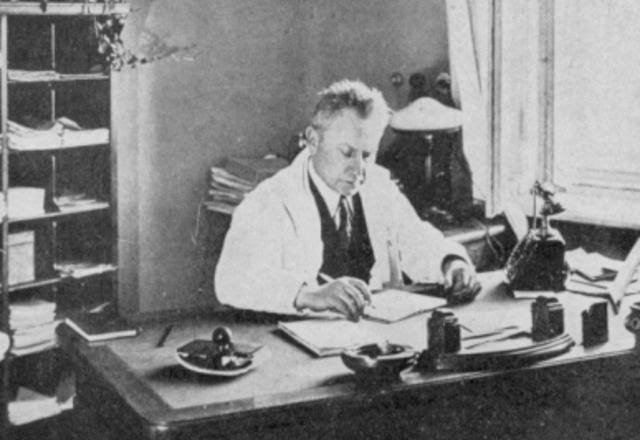
If you searched for “Leon Lattes” and landed in a tangle of genealogy results, you are not alone. Many people encounter this name through family tree platforms and immediately wonder: is this a real historical figure, or just a database entry someone added years ago?
The honest answer is — it depends on which name you are actually looking at. There is a confirmed historical figure named Leone Lattes, an Italian forensic physician whose work on blood evidence genuinely changed how investigators handled crime scene evidence. Whether the “Leon Lattes” in your family tree refers to him, or to a private individual with a similar name, is a separate question that requires careful checking.
This article covers the name distinction, who Leone Lattes actually was, what he contributed to forensic science, and how to responsibly verify any genealogy connection you may have come across.
Leon Lattes or Leone Lattes — What the Name Difference Means
“Leone” is the Italian form of “Leon.” The two names are closely related, and in historical records — immigration files, census documents, archival indexes, and family trees — the same person’s name often appears in different forms depending on the country, the recorder, or the time period.
This kind of variation is extremely common. It does not automatically mean two records refer to two different people. But it also does not mean they refer to the same person without proof.
If you encountered “Leon Lattes” through a platform like MyHeritage, that result may have come from the platform’s Famous Discoveries feature, which connects users to notable individuals found within family tree data. These tools are genuinely useful for exploring potential connections, but they are starting points, not conclusions.
Before assuming that a “Leon Lattes” entry in a family tree refers to the scientist Leone Lattes, you would need to compare:
- Birth and death dates
- Geographic locations (city, country, region)
- Family names — parents, siblings, spouse
- Original source documents, not just tree entries
Reliable public biographical information does exist for Leone Lattes as a confirmed historical figure. Any private individual named Leon Lattes would require entirely separate documentation to establish.
Who Leone Lattes Was
Leone Lattes was born on February 6, 1887, and died on November 4, 1954, reportedly in Pavia, Italy. He was an Italian-Jewish forensic physician and professor whose career was centered in Turin.
His professional world was legal medicine — the intersection of science and law. He worked on questions involving blood serology, biological inheritance, paternity disputes, and forensic identification. These were serious academic concerns at the time, and Lattes approached them with the rigor expected of a research physician.
He published a major work titled L’individualità del Sangue nella Biologia, nella Clinica e nella Medicina Legale — which translates roughly as “The Individuality of Blood in Biology, Clinical Practice, and Legal Medicine.” The title alone gives a sense of how broadly he thought about the subject.
His career was eventually disrupted by the racial laws introduced in Italy in the late 1930s under Mussolini’s government. As an Italian-Jewish professional, Lattes faced serious restrictions. In 1939, he relocated to Argentina, where he continued his work. His life dates and biography are drawn from secondary sources, so key facts should be cross-checked against academic or archival records where possible.
His Method for Reading Blood Groups From Dried Stains
This is the contribution Leone Lattes is most associated with, and it is worth explaining clearly — because it is often misunderstood or overstated.
In 1915, Lattes developed a technique for identifying ABO blood groups from dried bloodstains. That distinction matters. He did not invent blood typing itself. The ABO blood group system had already been identified by Karl Landsteiner years earlier. What Lattes did was solve a specific, practical forensic problem: how do you classify a bloodstain when the blood is no longer fresh?
At crime scenes, blood evidence is almost never collected in liquid form. It has dried. It has aged. Before Lattes’s method, that significantly limited what investigators could learn from a stain.
His technique involved a saline restoration process — a way of working with dried material to still extract meaningful biological information from it. Using this method, investigators could determine whether a stain belonged to blood group A, B, AB, or O, even from older samples.
Think of a dried bloodstain as a kind of biological label. Even after the moisture is gone, Lattes found a way to read what that label said about the blood’s group. It was a targeted solution to a targeted problem.
It is also important to say clearly: this method is not the same as modern DNA profiling. DNA analysis came much later and operates on entirely different science. Lattes’s technique was a meaningful early advance, but comparing it to what forensic labs do today would be misleading.
Why This Work Mattered in Forensic Medicine
Before Lattes developed this method, dried or aged blood at a crime scene offered very limited biological information. The stain could confirm that blood was present, but not much more in terms of linking it to a specific person or ruling someone out.
Being able to classify bloodstains by ABO group opened a new avenue for investigators. It did not solve cases on its own, but it added a credible biological layer to physical evidence. That was genuinely new.
His broader research into serology and paternity also fed into early forensic identification practices. Paternity questions — who is or is not the biological parent of a child — were being asked in legal settings, and blood analysis was emerging as one way to address them scientifically.
Through his academic role in Turin and his published research, Lattes helped establish blood analysis as a legitimate tool in legal medicine. He was working in a period when forensic science was still building its credibility, and careful methods like his contributed to that foundation.
His technique was an early step in what would eventually grow into a much larger field of biological evidence analysis — one that now includes DNA matching, touch DNA, and other methods far beyond what was possible in 1915. But every field has early contributors, and Lattes was one of them in this area.
For readers interested in how science, law, and history intersect in biography and research, resources like BusinessVerb cover a wide range of topics connecting real historical figures to the searches people make today.
How to Verify a Genealogy Connection to Leone Lattes
If you came to this article because a genealogy platform suggested a connection between your family and “Leon Lattes,” here is how to approach that responsibly.
First, treat the platform result as a lead, not a fact. Family tree tools can connect people based on data other users have entered, and those entries may contain errors or unverified assumptions.
Second, look for original documents. Birth certificates, marriage records, census filings, immigration papers, and obituaries are the building blocks of any verified family connection. These are available through genealogy platforms’ historical record collections and through national archives in Italy, Argentina, and elsewhere.
Third, compare specifics. If a “Leon Lattes” in your tree was born in Italy in the late 1800s, worked in medicine, and relocated to Argentina around 1939, that alignment with Leone Lattes’s known biography is worth investigating further. If the dates, locations, and family names do not align, you are likely looking at a different individual — or an error in the tree.
The surname “Lattes” on its own is not enough to establish a connection. It is a recognized Jewish family surname with historical depth, but sharing a surname does not mean sharing a family line.
A Clear Picture of a Careful Scientist
Leone Lattes was a real historical figure whose work left a measurable mark on forensic medicine. He solved a specific technical problem — reading blood groups from dried stains — at a time when that kind of biological analysis was just beginning to find its place in legal proceedings.
His life also reflects a broader historical reality. He was a Jewish professional in early twentieth-century Italy who faced racial persecution and was forced to rebuild his career in another country. That context is part of who he was, not just a footnote.
If you searched for “Leon Lattes” and found your way here, the most likely explanation is that Leone Lattes is the person the results were pointing toward. Whether you share a family connection with him is a question that only careful genealogical research — using original documents, verified dates, and confirmed family links — can answer.
What is not in question is that Leone Lattes made a real contribution to forensic science, one worth knowing about on its own terms.
Read Also: