
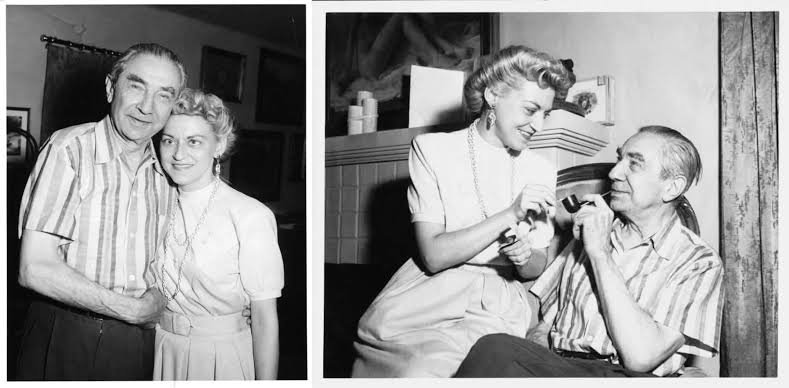
Most people who search for Hope Lininger do so because of one name — Bela Lugosi. He was the Hungarian-American actor who became Hollywood’s definitive Count Dracula, and Hope was the last woman he married before his death in 1956.
She is not a celebrity in her own right. No reliable source places her in the entertainment industry or any other public role. But her connection to Lugosi — and a few specific events that followed his death — give her a real and documented place in the story of one of classic Hollywood’s most iconic figures.
This article covers who Hope Lininger was, the facts about her 1955 marriage to Lugosi, what happened after he died, and why her name still surfaces in genealogy searches today.
Who Hope Lininger Was
Hope Lininger is not a public figure in the traditional sense. Her name appears in historical and genealogy records almost entirely because of her marriage to Bela Lugosi.
She was his fifth and final wife — not his only spouse. Lugosi had been married four times before Hope entered his life. That context matters, because some accounts can give the impression she was his one great love or his only partner.
Her birth date, birthplace, occupation, and early family background are not confirmed in the sources available. She has not been documented as an actress, model, or industry professional. Any details beyond what is confirmed should be treated with caution.
The 1955 Marriage to Bela Lugosi
Hope and Bela Lugosi married on August 24, 1955, in Los Angeles. According to the Bela Dracula Lugosi Blog, a source focused specifically on the actor’s life and history, Lugosi’s son — Bela G. Lugosi Jr. — served as best man at the ceremony. Friends and some of Lugosi’s co-workers were also in attendance.
It is worth knowing where this marriage fell in Lugosi’s timeline. By 1955, he was already in his early seventies. His most famous role — Count Dracula in the 1931 Universal film — had been produced more than two decades earlier. Born Béla Ferenc Dezső Blaskó in what is now Romania, Lugosi had built a career that made him one of the most recognizable faces in horror cinema. But by the mid-1950s, his health was declining and his career had slowed considerably.
The wedding was a quieter, more personal event rather than a Hollywood spectacle. The presence of his son and colleagues suggests it was a sincere occasion, though the sources do not provide extensive detail about the ceremony itself.
A Marriage That Lasted Less Than a Year
Bela Lugosi died in 1956, roughly one year after the wedding. The marriage ended because of his death, not separation or divorce.
That places Hope in a specific and somewhat poignant position in Lugosi’s life story. She was with him at the very end — the person he had chosen to marry in the final chapter of his life.
No available source confirms that Hope and Bela had children together. Bela G. Lugosi Jr., who served as best man, was Lugosi’s son from a previous relationship. The article will not speculate beyond that because the research does not support any further claim about children from this marriage.
The Steamer Trunk and Its Place in Hollywood Memorabilia History
One of the most concrete and interesting stories connected to Hope after Lugosi’s death involves a piece of luggage — specifically, Bela Lugosi’s steamer trunk.
After Lugosi died, Hope reportedly inherited the trunk. It was a personal item, the kind of thing an actor might have carried on travels and kept throughout a long career. For a few years, it stayed with her.
Then, in 1964, Hope donated the trunk to KQED, a public-radio station in San Francisco, for a fundraising auction. That act of donation — quiet and practical — is a clear example of how belongings connected to classic Hollywood figures move from private hands into public or collector history.
The trunk’s current location or ownership is not confirmed in available sources. It should not be described as a museum artifact or assigned a present-day owner without documentation to support that claim. What is known is the donation itself, and that tells its own small story about Hope’s life after Lugosi.
Hope Lininger’s Life After Lugosi
After Lugosi’s death, Hope did not remain in Los Angeles. According to the Bela Dracula Lugosi Blog, she moved to San Francisco in the early 1960s. That relocation aligns naturally with the KQED donation in 1964 — she was living in the city when she gave the trunk to the station.
The same source reports that in 1976, she moved to Hawaii. Beyond that, the public record goes quiet. No confirmed death date, professional history, or further biographical detail is available in the sources used for this article.
That is an honest summary of what is known. It is a limited picture, but it is an accurate one. Presenting invented details as fact would do a disservice to readers who are genuinely trying to understand who she was.
Why Her Name Appears in Genealogy Searches
If you have encountered Hope Lininger’s name on a genealogy platform like MyHeritage or FamilySearch, that is not unusual. Genealogy databases collect marriage records, census data, obituaries, family trees, and historical documents — and Bela Lugosi, as a well-documented public figure, naturally pulls related names into those records.
It is worth understanding how these platforms work. A name appearing in a family tree on a genealogy site does not automatically mean every attached date or detail has been independently verified. Some entries come from original documents — a marriage certificate, a census record, a newspaper announcement. Others come from user-submitted family trees that may or may not have been checked against primary sources.
When researching Hope Lininger specifically, look for the type of source behind any claim. A marriage date sourced from a civil record carries more weight than the same date listed in an unverified family tree. BusinessVerb follows the same principle when covering biographical profiles — confirmed details are reported as facts, while uncertain ones are clearly labeled as such.
The most reliable information about Hope Lininger currently comes from the Bela Dracula Lugosi Blog, which focuses on the actor’s life and legacy. It is a specialized blog rather than an official archive, but the details it provides — the marriage date, the role of Lugosi Jr. as best man, the steamer trunk donation, and Hope’s later moves — are specific enough to be useful as reported biographical information.
A Final Note on Hope Lininger’s Place in History
Hope Lininger is not a household name, and she likely never sought to be one. What is known about her fits into a fairly narrow window of time — a 1955 wedding, a husband who died the following year, a trunk donated to a radio station nearly a decade later, and two moves across the country before the public record goes silent.
That might seem like a small story. But it is a real one. She was present for the final year of Bela Lugosi’s life, and she was the person who decided what happened to at least one piece of his legacy after he was gone.
For readers who came here looking for a complete biography, the honest answer is that one does not exist in available public sources. What this article has offered is everything that is reliably documented — presented clearly, without invention or exaggeration.
If you are researching Hope Lininger through genealogy records, treat the information you find as a starting point. Look for original documents where possible, note the source behind each detail, and be cautious about treating user-submitted entries as confirmed facts. That is the most useful approach for anyone trying to understand a figure who left a modest but traceable footprint in a very famous person’s story.
Read Also: