
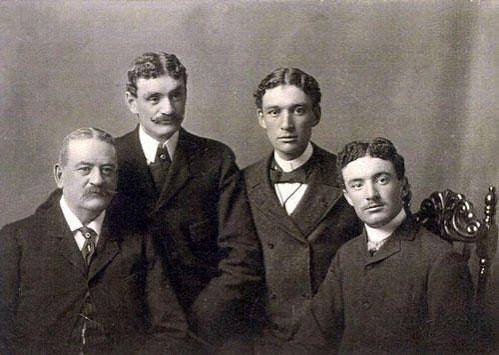
Beverly Hemings was born into slavery at Monticello in 1798. He left sometime around 1822, and after that, the documented record of his life becomes very thin. That kind of gap is not unusual for enslaved people who later crossed racial lines or adopted new names. The records simply stop following them.
This article covers what is actually known about Beverly — his family, his life at Monticello, his connection to Thomas Jefferson, and what likely happened after he left. It also explains why the record is incomplete and how to avoid confusing him with a later relative who shared a similar name.
Who Beverly Hemings Was
Beverly Hemings is commonly identified in historical and genealogical sources as William Beverly Hemings. Some sources spell the first name “Beverley” rather than “Beverly,” and records may list him under different combinations of these names. They all refer to the same person.
He was born on April 1, 1798, at Monticello in Virginia. The Thomas Jefferson Foundation’s genealogical chart lists him as born that year and notes him as living after 1822. That date — 1822 — marks when he left Monticello, not when he died.
One important clarification: the name Beverly Hemings appears in some genealogy databases in reference to two different people. Beverly Hemings born in 1798 is Sally Hemings’s son. Beverly Frederick Jefferson, born several decades later, was the son of Eston Hemings — Beverly’s younger brother. These are two separate individuals from two different generations, and mixing them up is a common mistake. This article returns to that distinction later.
Beverly is not a celebrity in the modern sense. But he is historically significant as a documented member of Sally Hemings’s family and, by strong historical consensus, a child of Thomas Jefferson.
His Mother, His Siblings, and the Hemings Family at Monticello
Beverly’s mother was Sally Hemings, an enslaved woman who lived and worked at Monticello for most of her life. Sally was the half-sister of Martha Wayles Skelton Jefferson, Thomas Jefferson’s late wife — a family connection that places the Hemings family in an unusually close but still deeply unequal position within Jefferson’s household.
Beverly had several siblings. Those who survived to adulthood included a sister, Harriet, and two brothers, James Madison Hemings and Thomas Eston Hemings. Other children Sally gave birth to died young.
The Hemings family held skilled roles at Monticello. Family members worked as carpenters, domestic servants, and farmers. Some were accomplished musicians. These positions gave the Hemings family a distinct place within the plantation’s daily life, but it is important to be clear: these roles existed within a system of enslavement. Skilled work was not a sign of freedom or consent.
Beverly himself was known as a fiddle player. Historical research connected to Monticello and Charlottesville’s music-history projects describes Beverly and his brother Eston as accomplished fiddlers. Beverly reportedly played at dances held at Monticello. His musical labor contributed to the estate’s social life — without recognition, without pay, and without freedom.
Thomas Jefferson and the Question of Paternity
One of the most common questions about Beverly Hemings is whether Thomas Jefferson was his father. The short answer is: the evidence strongly supports it, and the Thomas Jefferson Foundation at Monticello accepts Jefferson’s paternity as the most historically supported conclusion.
That conclusion is based on a combination of factors. Family testimony — especially the memoir of Beverly’s brother James Madison Hemings — directly names Jefferson as the father. Plantation records show Jefferson was present at Monticello at the times when Sally Hemings’s children were conceived. Documentary analysis and DNA-related historical work have further supported the connection.
It is worth being precise here. No document exists that functions like a modern birth certificate confirming Jefferson as Beverly’s father specifically. And the DNA analysis most widely discussed focused on Jefferson male-line descendants and Eston Hemings’s line, not Beverly’s directly. The evidence is strong and widely accepted, but it is historical evidence — not a laboratory result naming Beverly individually.
PBS Frontline’s documentary Jefferson’s Blood explains this distinction clearly: the historical likelihood is very high, but the proof operates through converging evidence rather than a single conclusive test. That is the careful and accurate way to frame it.
Leaving Monticello and What Came After
Beverly left Monticello around 1822. Jefferson’s approach to his surviving Hemings children involved allowing them to leave or freeing them as they reached adulthood. Beverly was one of those who departed during Jefferson’s lifetime.
What happened after that is less clear. Some historical accounts suggest he moved to Washington, D.C., and lived as a white man — a practice historians sometimes describe as “passing.” This should be understood as a reported and probable history, not a fully confirmed biography. The paper trail thins considerably after 1822.
His brothers Madison and Eston left more traceable records. Madison Hemings gave a detailed memoir published in 1873. Eston Hemings’s family eventually adopted the surname Jefferson and their history can be followed through census and probate records. Beverly’s story, by contrast, depends on a combination of plantation records, family tradition, and historical inference.
A profile on FamilySearch lists a possible marriage to a woman named Martha McCoy in 1831 and notes several children. That kind of entry is useful as a research lead. But user-contributed genealogy profiles can carry information copied across databases without clear sourcing. A researcher would want to look for the actual marriage record, a census entry, or a church or probate document before treating those details as established facts.
Why Crossing Racial Lines Was Not a Simple Choice
It is worth pausing on what “passing as white” meant in the nineteenth century. This was not simply a personal decision about identity. It happened within a context of racial violence, strict legal restrictions, and enormous social pressure. For a man of Beverly’s background to live openly as Black in that era carried serious risks. Moving into white society, if that is what he did, was a survival strategy shaped by forces far larger than individual preference.
That context matters when reading his story. The incomplete record is partly a product of those same pressures. People who changed their names, crossed racial lines, or moved to new cities often did so precisely to avoid being found.
Beverly Hemings and Beverly Frederick Jefferson: Two Different People
As mentioned earlier, some genealogy searches return information about Beverly Frederick Jefferson when a reader is looking for Beverly Hemings. These are not the same person.
Beverly Frederick Jefferson was the son of Eston Hemings — Beverly Hemings’s younger brother. Eston and his family eventually moved from Ohio to Wisconsin and adopted the surname Jefferson. Beverly Frederick Jefferson was part of that later generation. Monticello’s Getting Word archive and finding aids related to the Jefferson Family Papers both support this distinction clearly.
If you are researching Beverly Hemings born in 1798, and you find records that seem too recent or that reference the Jefferson surname, you may have crossed into a different branch of the family.
Why the Record Is Incomplete
Beverly’s story has gaps for reasons that apply broadly to enslaved people in American history. Enslaved individuals rarely controlled their own official records. Their names were often recorded in plantation inventories or tax lists rather than in documents that followed their full lives. When people left those systems — through freedom, escape, or by crossing into white society — the paper trail often ended.
For readers who want to go deeper into topics like this, BusinessVerb covers a range of historical and cultural profiles that put individual stories into broader context.
Beverly’s brothers Madison and Eston are better documented because they stayed visible in Black communities and left records that historians could trace. Beverly, if he did pass into white society, would have had reason to leave fewer traces. That is not a failure of historical research — it reflects the reality of how race, law, and identity worked in nineteenth-century America.
What We Can Say With Confidence
Here is what the historical record supports clearly:
- Beverly Hemings was born on April 1, 1798, at Monticello in Virginia.
- His mother was Sally Hemings, an enslaved woman at Monticello.
- His siblings who survived to adulthood were Harriet, Madison, and Eston Hemings.
- The Thomas Jefferson Foundation accepts Jefferson’s paternity of Sally Hemings’s children, including Beverly, as the most historically supported conclusion.
- Beverly was a skilled fiddler who reportedly performed at Monticello.
- He left Monticello around 1822 and is recorded as living after that date.
- His later life is less documented than his brothers’, and some details attributed to him in genealogy databases have not been fully corroborated.
Beyond those points, the historical record becomes a matter of careful reconstruction. Beverly Hemings was a real person with a documented family, a documented skill, and a documented departure from Monticello. What came after remains, for now, partly an open question — one that reflects just how much of enslaved people’s lives history has yet to fully recover.
Read Also: