
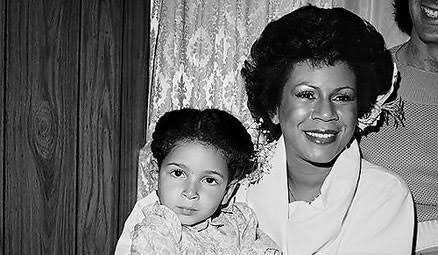
If you’ve searched the name Daniel Riperton online, you’ve probably landed on genealogy-style results rather than anything that looks like a biography or career page. That’s not a coincidence. The name draws attention primarily because of the Riperton surname — and that surname is most famously associated with Minnie Riperton, one of the most distinctive voices in American music history.
This article covers what is actually known about Daniel Riperton based on available records, why private individuals like him appear in genealogy searches alongside celebrity names, and the broader story of the Riperton family — particularly Minnie Riperton’s life, music, and lasting legacy.
Who Daniel Riperton Is, Based on Available Records
Daniel Riperton does not appear to have a widely documented public career in music, entertainment, or any other field. There is no independently published biography, verified career history, or confirmed personal timeline available from reliable public sources.
His name surfaces primarily through genealogy-style databases and family-tree records rather than through editorial profiles, interviews, or professional credits. That alone tells you a lot — it suggests he is most likely a private individual rather than a public figure.
No confirmed birth date, occupation, or detailed life information is available from authoritative sources. What can be said carefully is that genealogy records connect the name Daniel Riperton to the broader Riperton family — the same family associated with singer Minnie Riperton. However, the exact nature of that connection should be treated as a research lead rather than a confirmed biographical fact, since user-contributed family trees are not always independently verified.
The honest answer to “who is Daniel Riperton?” is simply this: a private individual whose name appears in family history records, likely attracting search interest because of the famous surname he shares.
How Genealogy Databases Connect Private Individuals to Famous Families
It can feel surprising when a name with no public profile appears prominently alongside a celebrity in search results. But genealogy platforms explain this completely.
Databases like MyHeritage build their records from multiple sources: user-submitted family trees, historical census data, marriage records, obituaries, birth registrations, and immigration documents. When someone builds a family tree that includes a private relative of a famous person, that relative’s name gets indexed — and searchable.
Think of a family-tree entry like a footnote in a book. It points somewhere and can be useful, but it requires further checking before you treat it as solid fact. A private person appearing in a genealogy database does not mean they had a public career, shared a famous relative’s spotlight, or were even directly involved in that relative’s life in any meaningful public sense.
It also means the record reflects what a family historian submitted — not necessarily what an archivist or journalist independently verified. User-contributed entries are starting points, not endpoints.
This is why it’s important to look for corroborating sources. An obituary, a newspaper mention, an official record, or an archival document can help confirm what a family tree only suggests. In Daniel Riperton’s case, no such corroborating sources have surfaced in widely available public records.
For readers curious about the Riperton family specifically, the more fruitful path is to look at what is well-documented — which brings us to Minnie Riperton herself.
Minnie Riperton’s Life and Career
Minnie Riperton was born in Chicago, Illinois, in 1947. She showed remarkable vocal ability from a young age and began her formal music training early, studying at the Lincoln Center in Chicago.
Her professional career started in the 1960s. She was a member of the psychedelic-soul group Rotary Connection, which was known for its experimental blend of rock, jazz, and soul. That work gave her a platform, but her solo career is what made her a household name.
What set Minnie Riperton apart from virtually every other singer of her era was her five-octave vocal range. She could move from deep, warm lows to notes so high they sat beyond the range most trained singers could reach. It was not a gimmick — it was a genuine and rare natural ability that she used with real musicality.
Her 1974 album Perfect Angel, produced with her husband Richard Rudolph, became her most celebrated work. The album’s standout track, “Lovin’ You,” became an international hit. The song’s gentle, airy quality — built around a simple melody and her extraordinary upper register — made it instantly recognizable and has kept it in rotation for decades.
Minnie Riperton was widely recognized as one of the most distinctive vocalists in American popular music during the 1970s. Her influence can be heard in generations of singers who followed her.
Sadly, her career was cut short. She was diagnosed with breast cancer and passed away in July 1979 at just 31 years old. Before her death, she became an early spokesperson for the American Cancer Society, using her public profile to raise awareness at a time when breast cancer was rarely discussed openly. That advocacy added another dimension to her legacy beyond music.
Minnie Riperton’s Family and Personal Life
Minnie Riperton married songwriter and record producer Richard Rudolph. Their partnership was both personal and professional — Rudolph co-wrote and produced much of her solo material, including Perfect Angel.
Together, they had two children. Their son, Marc Rudolph, has worked in film and acting. Their daughter, Maya Rudolph, has built a highly successful career of her own as an actress and comedian, known widely for her work on Saturday Night Live and a long list of film and television projects.
Maya Rudolph has spoken publicly about her mother over the years and has acknowledged the deep influence Minnie had on her life, even though Maya was still very young when her mother died. The Rudolph children carry the Riperton family’s connection to entertainment into the present day.
As for Minnie’s broader family background — her parents, siblings, and extended relatives — public records are less thorough. Detailed information about that side of the family is not consistently documented in widely available sources.
This is where Daniel Riperton’s name tends to appear: in the broader extended family tree, rather than among Minnie’s immediate household. But without a verified, independent source specifying the relationship clearly, it would not be accurate to describe the exact nature of any connection between Daniel and Minnie’s immediate family.
For readers who enjoy following celebrity family histories and profiles, BusinessVerb covers a range of topics in the entertainment space with a focus on verified, factual information.
What This Means for Readers Researching the Riperton Family
If you came here hoping for a detailed biography of Daniel Riperton, the honest answer is that the public record simply does not contain one. He appears to be a private individual, and available records do not support claims about his occupation, personal life, or specific relationship to Minnie Riperton beyond a genealogical connection.
That is not unusual. Many people who share a surname with a famous figure appear in genealogy records without ever having sought public attention themselves. Their presence in a database reflects family history research, not public recognition.
What is well-documented is the remarkable life of Minnie Riperton — her voice, her music, her courage in speaking publicly about her illness, and the family she left behind. Her children have continued to build their own legacies, particularly Maya Rudolph, who is now a celebrated figure in her own right.
If you are researching the Riperton family for genealogical purposes, the best approach is to treat online family-tree entries as leads and then look for supporting records — census documents, obituaries, official registrations, and published family histories — before drawing firm conclusions about any specific relationship.
And if you are simply curious about the name because you love Minnie Riperton’s music, that curiosity is completely understandable. She left behind a body of work that continues to matter, and it is natural to want to know more about the family behind it.
Final Thoughts
Daniel Riperton remains a largely private figure whose name surfaces through genealogy records connected to the broader Riperton family. No confirmed public biography, career history, or verified personal details are available from reliable independent sources.
The Riperton name carries weight because of Minnie Riperton — a genuinely extraordinary singer whose five-octave voice, landmark recordings, and brave public health advocacy earned her a permanent place in American music history. Her family, including her children Marc and Maya Rudolph, has continued that connection to the arts.
When researching names that appear in genealogy databases, the most important habit is distinguishing between what a record suggests and what an independent source confirms. In Daniel Riperton’s case, the honest answer is that the public record offers very little — and that is worth saying clearly rather than filling the gap with speculation.
Read Also: