
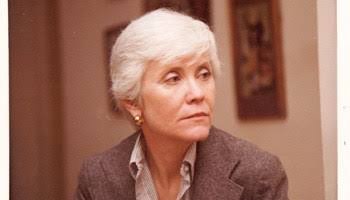
Georgiana Yoke is not a name most people recognize on its own. But she appears in one of the most disturbing criminal cases in American history — not as a criminal herself, but as a woman who was deceived, married under false pretenses, and later called to testify against the man who misled her.
Her story is about more than her connection to H. H. Holmes. It is about a real person with her own background, her own life before and after Holmes, and a position that history has not always treated fairly.
This article covers what the historical record actually says about Georgiana — her Midwestern roots, how she met Holmes, the Denver marriage, her role as a witness, and what happened to her after his execution.
Who Was Georgiana Yoke
Georgiana Yoke was born in 1869, likely in Indiana or Illinois, into a Methodist family with Midwestern roots. Genealogical records commonly identify her parents as John Thomas Yoke and Mary W. Toner, though name spellings vary across different databases and sources.
Local history accounts from sources like Historic Indianapolis describe her growing up in Edinburgh, attending a teachers’ college in Danville, and working as a schoolteacher in Columbus. Around the time of the 1893 World’s Columbian Exposition in Chicago, she was reportedly working in a department store in the city.
She appears in historical records under several name forms: Georgiana Yoke, Georgiana D. Yoke, Georgiana Yorke, and later Georgiana Chapman. These variations can make it difficult to trace her through public records, and genealogy profiles on sites like FamilySearch and Ancestry should be treated as useful starting points rather than fully verified accounts.
What is clear is that she was a real person — not just a footnote in someone else’s criminal history.
How She Met H. H. Holmes
Herman Webster Mudgett, known publicly as H. H. Holmes, had a well-documented habit of using aliases. When he approached Georgiana Yoke, he was using the name Henry M. Howard — not his real name, and not the name most people now associate with him.
He reportedly presented himself as a man with financial means and told her he had access to property and a potential inheritance in Texas. That kind of presentation was typical of Holmes. He used wealth, charm, and false identities to build trust with multiple people over many years.
The meeting most likely happened during the World’s Fair period in Chicago, when Holmes was already managing multiple identities and relationships. Georgiana’s willingness to trust him reflects Holmes’s skill at manipulation — not any personal failing on her part.
One practical note for anyone tracing this history: because Holmes used the name Henry M. Howard, searches for Georgiana’s marriage records may return results under Howard rather than Mudgett or Holmes. The alias creates a paper trail that does not immediately connect to the man’s actual identity.
The Denver Marriage and What It Meant Legally
Marriage records and genealogical sources place the wedding ceremony in Denver on January 17, 1894. Holmes was using the name Henry M. Howard when they married.
The legal problem was significant. Court records from Commonwealth v. Mudgett confirm that Georgiana went through a form of marriage with the defendant, and that he was already married to another woman at the time. This made the ceremony legally invalid and placed it within the evidence surrounding Holmes’s bigamy.
Georgiana had no documented reason to know his real name or his marital status. She believed she was marrying Henry Howard, a man with legitimate prospects. The record does not support the idea that she entered this arrangement with knowledge of his true identity or criminal background.
The bigamy element matters because it shows that Holmes’s deception of Georgiana was not just romantic manipulation — it was a legal fraud that left her in a marriage that did not exist in the eyes of the law.
Her Testimony in the Holmes Criminal Case
Georgiana Yoke did not just disappear from the story after Holmes was arrested. She became a witness in the criminal proceedings connected to the murder of Benjamin Pitezel, a man whose death was central to the case against Holmes.
Court records show that Georgiana had traveled with Holmes during part of the period when Holmes was also moving members of the Pitezel family between cities — separately, and without their knowledge of each other’s locations. Being part of that travel does not make her an accomplice. Being a witness who was present with a suspect during a particular period is legally distinct from being charged with a crime.
Her testimony gave evidence about Holmes’s actions around the time of Pitezel’s death. According to court records from Commonwealth v. Mudgett, her account tended to incriminate Holmes and was later challenged by the defense. That is the role she played: a witness whose firsthand observations carried weight in the prosecution.
She was not prosecuted. There is no reliable primary source that establishes she had advance knowledge of Holmes’s crimes or that she participated in them.
What She Likely Knew — and What She Didn’t
This is the question that tends to follow Georgiana’s name. Did she know what Holmes was doing?
The available sources support the conclusion that she knew Holmes personally and was present during important events in the timeline. They do not support the claim that she knew the full scope of his crimes before the investigation began.
Holmes operated by keeping people separated and uninformed. He used different names, different stories, and different locations simultaneously. The people closest to him were often the least likely to see the full picture. Georgiana’s situation appears to fit that pattern.
Attributing criminal knowledge to her without primary source evidence would be inaccurate — and unfair to a person who was herself a victim of his deception.
Life After Holmes
After Holmes was executed in May 1896, Georgiana had to rebuild her life under circumstances that were not of her making. She had gone through a fraudulent marriage, traveled with a man later convicted of murder, and testified in a major criminal trial.
According to genealogical records, she married Harry C. Chapman on November 10, 1898 — about two years after Holmes’s execution. Later accounts and records identify her as Georgiana Chapman and connect her to Southern California. She reportedly died in 1945 in the Los Angeles area.
The available sources provide limited detail about her life with Harry Chapman or her years in California. It would be inaccurate to assume she lived in complete obscurity or complete comfort. What the records show is that she continued her life, remarried, and outlived Holmes by nearly five decades.
For readers researching her further, it helps to know that she may appear in census, marriage, and death records under any of these names: Georgiana Yoke, Georgiana Yorke, Georgiana D. Yoke, or Georgiana Chapman. Using multiple record types together — rather than relying on a single family tree — gives a more complete picture. Resources like BusinessVerb can also help when navigating research on historical figures whose records are scattered across different formats and databases.
Why Georgiana Yoke Still Matters
Georgiana Yoke is sometimes treated as a minor character in the H. H. Holmes story. That framing misses something important.
She is one of the clearer examples of how Holmes operated: by constructing a false identity, approaching a credible and educated woman, building trust through invented wealth and promises, and drawing her into his orbit without her full understanding of what she was entering.
Her testimony then became part of the legal record that helped convict him. That is not a minor role. A person who was deceived, who lived through the exposure of that deception, and who then faced cross-examination in a murder trial — that is someone whose experience deserves accurate treatment.
The H. H. Holmes case has attracted a great deal of popular attention over the years, and not all of it is careful with the people surrounding him. Georgiana’s story is best understood through court records, local history accounts, and genealogical research — not through sensationalized retellings that blur the line between victim and accomplice.
She was a Midwestern woman, a former schoolteacher, a witness in a murder trial, and ultimately a person who moved forward after one of the most disorienting experiences imaginable. That is who Georgiana Yoke was.
Read Also: